Shingle Roof Leak Repair: Causes, Fixes, and When to Replace
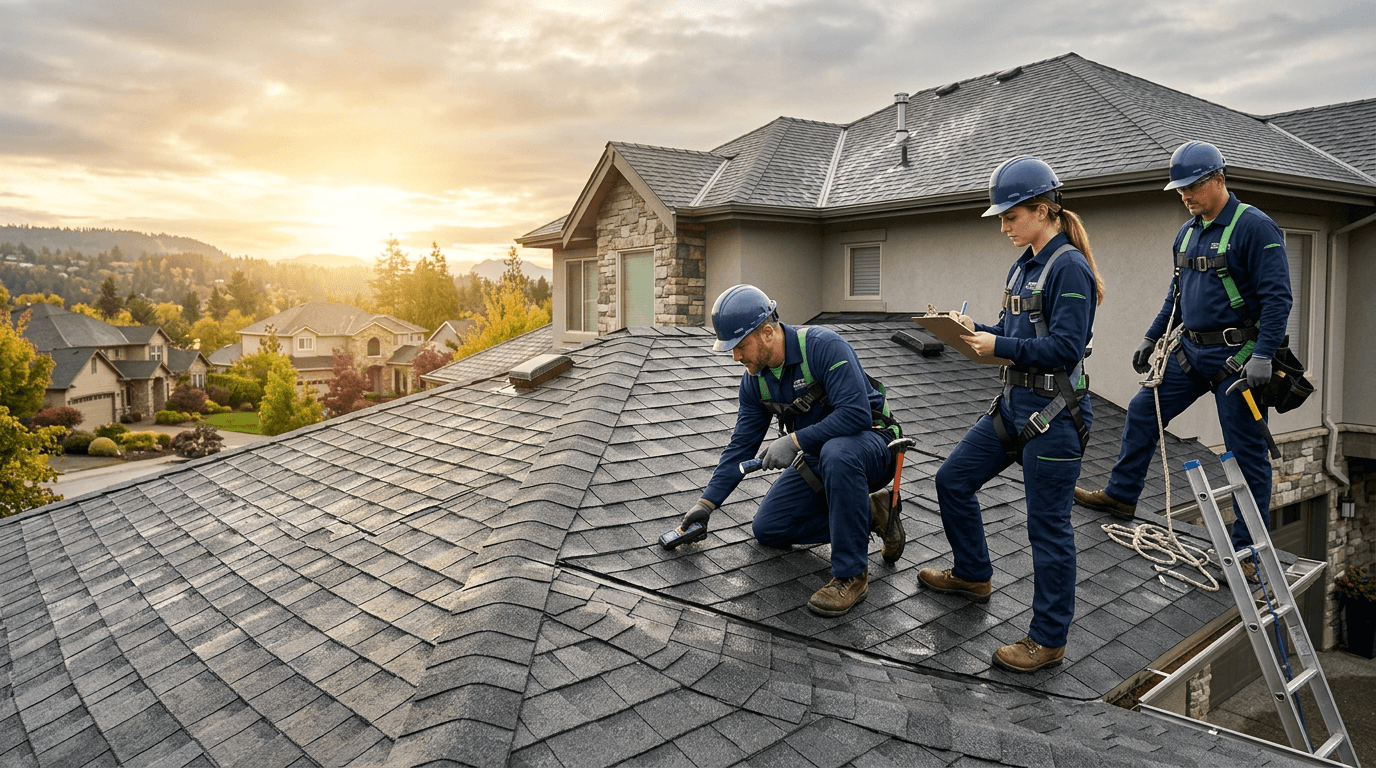
import { CTA } from '@/components/blog/CTA'; import { FAQ } from '@/components/blog/FAQ';
A shingle roof leak is one of the most common — and most costly — problems Florida homeowners face. Between relentless UV exposure, summer thunderstorms, tropical humidity, and the occasional hurricane, asphalt shingles in Spring Hill, Hudson, New Port Richey, Holiday, Port Richey, Elfers, and Clearwater Beach take a beating most other climates simply don't dish out.
The good news: most shingle roof leaks are entirely preventable when caught early. The bad news: once water gets past your shingle layer, the clock starts ticking on structural damage, mold growth, and ruined insulation.
This guide walks you through exactly what causes shingle roof leaks, how to identify the source, what repairs actually work, and the clear signs that tell you it's time to stop patching and start planning a replacement.
What Causes Shingle Roof Leaks in Florida?
Florida's climate is uniquely hostile to asphalt shingle roofing systems. Here are the primary culprits behind most shingle roof leaks across Pasco and Pinellas counties.
Wind Damage and Lifted Shingles
Tropical storms and afternoon thunderstorms regularly produce wind gusts of 40–60 mph along the Gulf Coast. When wind gets underneath a shingle edge, it breaks the seal strip bond. Once that seal breaks, the shingle lifts and flaps — creating a direct pathway for driven rain.
After just a few lift-and-seal cycles, the adhesive strip often won't re-bond on its own. That lifted shingle becomes your roof's weakest point.
UV Degradation and Thermal Cycling
Surface temperatures on a dark asphalt shingle roof in a Florida summer regularly exceed 150°F. Day after day of expansion and contraction causes shingles to become brittle, crack, and lose their protective mineral granules.
Granule loss is a leading indicator of end-of-life shingle systems. Check your gutters and downspouts — if you're seeing significant granule accumulation, your shingles are shedding their UV armor.
Improper Flashing Installation
The vast majority of shingle roof leaks don't originate from the shingle field at all. They come from flashing — the thin metal strips installed at roof penetrations and transitions.
Common flashing failure points include:
Chimney flashing — step flashing and counter-flashing that separates or corrodes Vent pipe boots — rubber neoprene seals that crack after 5–7 years of sun exposure Valley flashing — metal valleys that rust or shingle-cut valleys with improper overlap Sidewall and headwall transitions — where the roof plane meets a vertical wall Drip edge gaps — missing or improperly installed drip edge at eaves and rakes
Ice Dam Effects (Yes, Even in Florida)
While true ice dams are rare in central Florida, brief cold snaps can create a similar phenomenon. When daytime heat melts morning dew or light rain and nighttime temperatures dip near freezing, water can back up under shingle edges — particularly on north-facing slopes with heavy tree cover.
Aging and End-of-Life Failure
Three-tab asphalt shingles typically last 12–18 years in Florida's climate. Architectural shingles may reach 20–25 years. Beyond that window, widespread failure is no longer a matter of "if" but "when."
Early Warning Signs of a Shingle Roof Leak
Catching a leak early is the difference between a $300 repair and a $15,000 remediation. Here's what to watch for:
Visible Ceiling Stains and Discoloration
Brown, yellow, or copper-colored stains on your ceiling or along walls are the most obvious sign. These stains follow the path of least resistance through your attic, meaning the visible stain is rarely directly below the actual leak entry point.
Musty Odors and Mold Growth
If your attic or upper rooms smell musty, moisture is present. Mold can begin growing on wet wood decking within 24–48 hours. By the time you see visible mold colonies, the moisture problem has existed for weeks or months.
Damaged or Missing Shingles
Walk around your property after any major storm. Look for:
Curling or cupping shingle edges Cracked or broken shingle tabs Completely missing shingles Shingles that appear "telegraphed" (visible nail lines pushing through) Bald spots where granules have worn away
Water in the Attic
During or after rain, inspect your attic with a flashlight. Look for wet insulation, dark streaks on rafters, dripping water, or daylight visible through the roof deck. Even small pinhole leaks will show as dark staining on the underside of plywood sheathing.
Increased Energy Bills
A compromised roof system allows conditioned air to escape and humid outdoor air to enter. If your cooling costs spike without an obvious explanation, your roof's ventilation and insulation may be compromised by moisture intrusion.
How to Find the Source of a Shingle Roof Leak
Finding where water enters your roof is often harder than fixing it. Water travels along rafters, pipes, and insulation before it ever drips onto your ceiling.
Start at the Penetrations
Over 70% of shingle roof leaks originate within 3 feet of a roof penetration. Inspect every vent pipe, skylight, chimney, and plumbing stack boot first. Look for cracked rubber, rusted metal, lifted caulk, or gaps between the flashing and shingle layers.
Check the Valleys
Roof valleys channel the highest volume of water on your entire roof. Whether you have open metal valleys or closed-cut valleys, any gap, rust hole, or shingle separation in a valley will produce a leak almost immediately during heavy rain.
Trace Interior Stains Upward
When you see a ceiling stain, go into the attic and trace the water trail uphill. Water runs along the bottom of roof decking, rafters, and electrical wires. The highest point of moisture you can find is closest to the entry point.
When visual inspection doesn't reveal the source, a controlled hose test can. One person sprays water in small sections starting from the eave and working upward while a second person watches inside the attic. Isolate sections for 3–5 minutes each. When water appears inside, you've found your leak zone.
Professional tip: Never start a hose test at the ridge. Always begin at the bottom and work up. Starting at the top floods every section below the actual leak and gives you false positives.
Shingle Roof Leak Repair Methods That Actually Work
Replacing Individual Damaged Shingles
For localized damage — one or a few cracked, curled, or missing shingles — individual replacement is straightforward and cost-effective.
The process involves:
Breaking the seal on shingles above the damaged one (a flat pry bar works best) Removing the nails holding the damaged shingle Sliding in the replacement shingle Nailing it in place with roofing nails (4 per shingle, positioned at the nail line) Hand-sealing the tabs above with roofing cement
Matching the existing shingle brand, color, and profile is important for both aesthetics and uniform performance. If your roof is more than 10 years old, exact matches may be discontinued — a roofing contractor can source a close equivalent.
Repairing or Replacing Flashing
Flashing repairs depend on the failure type:
Separated step flashing — lift shingles, remove old flashing, install new step flashing piece by piece, re-seal Cracked vent pipe boots — pull the old boot, slide a new one over the pipe, nail the flange, and seal Corroded valley metal — remove valley shingles, replace the valley metal with a wider gauge piece, re-shingle Failed caulk joints — remove all old caulk (don't just layer over it), clean the surface, and apply premium polyurethane roof sealant
Sealing Small Leaks with Roofing Cement
For small holes, gaps, or cracks, a quality roofing cement or elastomeric sealant can provide a temporary or medium-term fix. Clean the area thoroughly, apply the sealant with a putty knife or caulk gun, and feather the edges to prevent water pooling.
Roofing cement is a temporary solution, not a permanent repair. It dries out, cracks, and needs re-application every 2–4 years.
Repairing Roof Deck Damage
If water has rotted sections of your plywood or OSB decking, those sections must be replaced before any shingle work. Soft decking won't hold nails properly, and new shingles over rotten wood will fail within months.
Deck replacement involves removing shingles in the affected area, cutting out the damaged decking, screwing in new pressure-treated plywood, re-felting, and re-shingling.
When Shingle Roof Repair Isn't Enough: Signs You Need a Replacement
No homeowner wants to hear that their roof needs replacing. But continuing to patch a roof that's beyond its service life burns money and puts your home at risk.
Age Beyond Service Life
If your asphalt shingle roof is over 18 years old (three-tab) or over 22 years old (architectural) in Florida's climate, you're on borrowed time. Repairs become increasingly frequent and less effective.
Widespread Granule Loss
When granules appear in gutters, downspouts, and at the end of every rain event across the entire roof, the shingle mat is exposed to UV rays. This accelerates aging exponentially.
Multiple Active Leak Points
One leak can be a localized fix. Three or more leaks in different roof areas signal systemic failure. At that point, you're not fixing a roof — you're managing its decline.
Sagging Roof Deck
A sagging roofline indicates structural issues — either rotted decking, compromised trusses, or both. This is no longer a shingle problem. This is a building integrity problem. Call a professional immediately.
Daylight Through the Roof Boards
If you can see sunlight through gaps in your roof decking from the attic, your roof deck has separated or shrunk. This means widespread moisture intrusion and potential structural compromise.
The Cost of Ignoring a Shingle Roof Leak
A small, timely shingle repair typically costs between $350 and $900. Waiting until that leak causes secondary damage can multiply costs dramatically:
Rotted decking replacement: $1,500–$4,000 Attic mold remediation: $2,000–$6,000 Damaged insulation replacement: $800–$2,500 Interior ceiling and paint repair: $500–$3,000 Full emergency roof replacement: $8,000–$18,000+
The math is simple. Early intervention is always cheaper than deferred maintenance.
Why Shield Roof Pro
At Shield Roof Pro, we've spent years diagnosing and repairing shingle roof leaks across Spring Hill, Hudson, New Port Richey, Holiday, Port Richey, Elfers, and Clearwater Beach. Florida roofing demands local knowledge — we know which shingle manufacturers hold up to our UV index, which flashing details survive tropical storms, and exactly when a repair crosses the line into replacement territory.
We don't push replacements when a repair will do. And we won't waste your money patching a roof that's reached its end. Every inspection is honest, every recommendation is backed by photos and clear explanations, and every repair is performed with materials rated for Florida's specific climate challenges.
When you call 727-555-ROOF, you get a thorough roof assessment — not a sales pitch.
<CTA phone="727-555-ROOF" text="Got a shingle roof leak? Don't wait until it becomes a structural problem. Call Shield Roof Pro at 727-555-ROOF for a fast, honest assessment." />
Frequently Asked Questions
<FAQ items={[ { question: "How much does it cost to repair a leaking shingle roof in Florida?", answer: "A single-shingle repair or flashing fix typically costs $350–$900. More extensive repairs involving deck replacement or multiple flashing points range from $1,200–$3,500. Full shingle roof replacement in Florida averages $6,500–$15,000 depending on size, materials, and complexity." }, { question: "Can I repair a shingle roof leak myself?", answer: "Simple repairs like replacing one damaged shingle or re-caulking a vent pipe boot are manageable for experienced DIYers. However, working on a roof in Florida carries fall risks, heat exposure risks, and the chance of causing additional damage. If your leak involves flashing, valleys, or deck rot, call a professional." }, { question: "How long does a shingle roof last in Florida?", answer: "Three-tab asphalt shingles typically last 12–18 years in Florida's harsh UV and storm-heavy climate. Architectural (dimensional) shingles can reach 20–25 years with proper installation and ventilation. Roofs in shaded, well-ventilated areas tend toward the upper end of these ranges." }, { question: "Will homeowners insurance cover shingle roof leak repairs?", answer: "Insurance typically covers leaks caused by sudden, covered perils like windstorms, fallen trees, or hail. It does not cover leaks caused by normal aging, lack of maintenance, or wear and tear. Documentation and a professional inspection report are essential for any insurance claim." }, { question: "How do I know if my shingle roof leak is coming from flashing or the shingles themselves?", answer: "Leaks around chimneys, vents, skylights, and walls are usually flashing-related. Leaks in the middle of a ceiling with no nearby penetrations often point to damaged shingles. A professional inspection with a moisture meter and attic examination can pinpoint the exact source." } ]} />
Need professional roofing help?
Next Level Roofing Contractors serves the Tampa Bay area with 18+ years of experience. Request a free estimate through our contact form.
Request Free Estimate